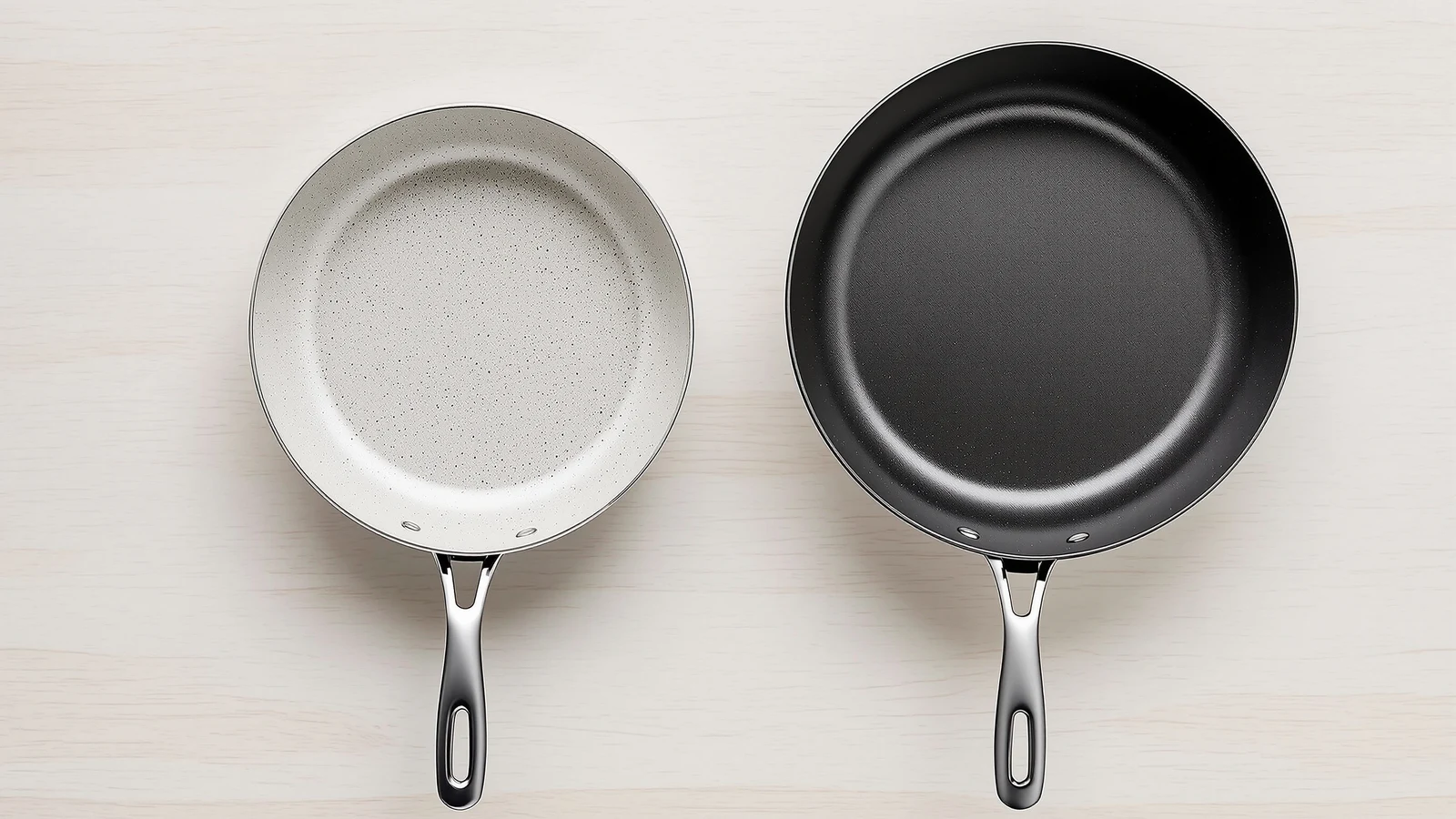
These three phrases get used almost interchangeably in marketing copy, but they claim different things, and only one of our four sets makes any of them explicitly.
PFOA-free refers to a single chemical, perfluorooctanoic acid, once used as a processing aid in manufacturing some PTFE. US manufacturers phased it out years ago, and "PFOA-free" is now close to universal on PTFE cookware. It says nothing about the coating's fluoropolymer chemistry itself — it rules out one legacy processing chemical, not the broader PFAS class.
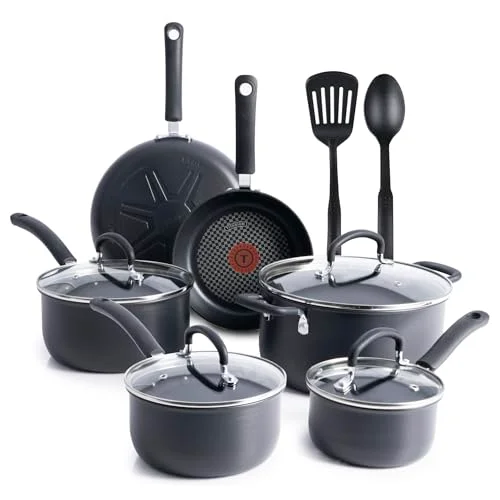
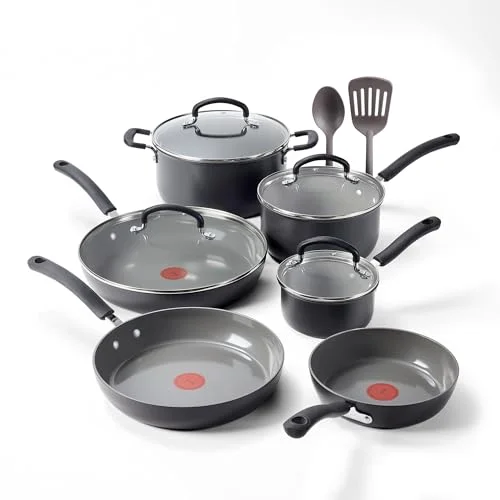
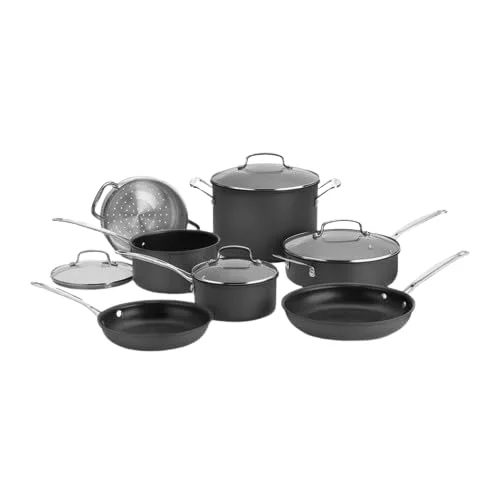
PFAS-free is a broader claim about that whole chemical class, and it's the label most often attached to ceramic coatings, since a silica-based ceramic finish isn't a fluoropolymer in the first place. Of the four sets compared here, only Cuisinart's Chef’s Classic states it outright: the listing describes its PURELYCERAMIC interior as "PFAS-Free." Neither T-fal listing in this comparison makes a PFAS or PFOA claim of any kind, on either the PTFE or the ceramic version — a real gap in how precisely these two listings are written, and a reason to check the current listing yourself if a PFAS claim specifically matters to your purchase.
"Made without intentionally added PFAS" is a more cautious phrasing some makers use instead of a blanket PFAS-free claim. It states that no PFAS compound was deliberately formulated into the coating, while allowing for the possibility of trace or incidental presence that a blanket claim would have to rule out entirely. It's a narrower, more defensible promise than "PFAS-free," and worth reading as such rather than treating the two phrases as synonyms.
This is general information about how these labels are used in the cookware market, not a health or safety recommendation; questions about PFAS exposure belong with a doctor or regulatory body, not a cookware comparison site.